
Piston Death
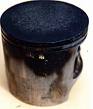 |
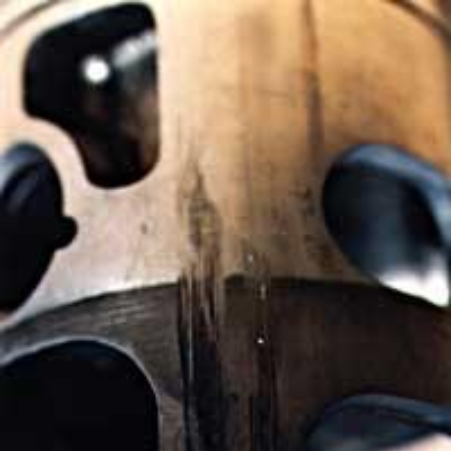
| If your piston looks like this, you haven’t changed your rings since your 15-year-old son was born! As a matter of fact, your silencer packing is blown, you’re using cheap oil, and your air filter is full of mouse crap! Dude, You need to work on your bike once in a while. |
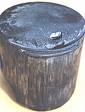 |
| Classic example of detonation. In layman’s terms, you overheated the dog out of your motor. This is caused by poor or no coolant, lean jetting, vacuum leaks, overly advanced timing, poor ignition components or insufficient piston clearance. |
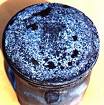 |
| More detonation! |
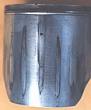 |
| The scoring marks indicate insufficient piston clearance. Use the manufacturer’s recommended specifications for clearance when changing your piston. It’s always better to go with a little more clearance than not enough |
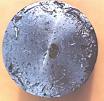 |
| This is what happens when a piece of your valve, spark plug, or lower-end connecting rod bearing meets the top of your piston. |
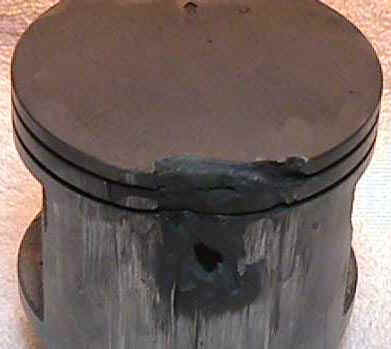 |
| The arrow on the front of your piston points toward the front. Put it in backwards and you’ll have something that looks like this. If you did this, you already know what your cylinder looks like. |
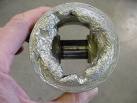 |
| Broken valve head VS Piston. No winners here. |
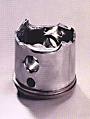 |
| Broken piston skirt. The most common reasons are excessive piston clearance and severely worn pistons. |
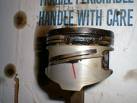 |
| Broken ring lands. The piston is so worn out, the rings were able to move up and down in the groves and acted like hammers until……..BOOM! |
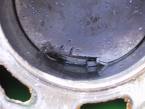 |
| More detonation! |
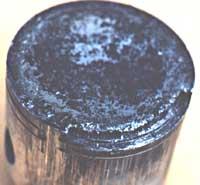 |
| Typical coolant leak. Coolant enters the cylinder and meets the hot piston. This is why you should check the cylinder head for distortion at every rebuild. |
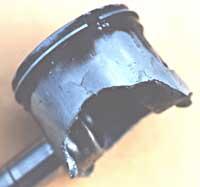 |
| Too much cylinder bore clearance. The piston skirt slams against the cylinder until…..BOOM!! |
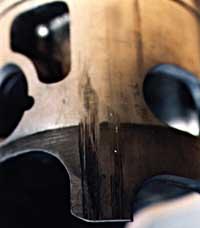 |
| Only two things will do this to the intake side of your piston. Lack, or loss, of lubrication or water entering the air filter. |
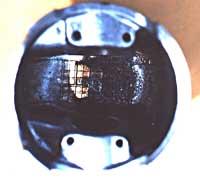 |
| Oil burnt on the underside of the piston indicates overheating. Check coolant, timing, crankseal leaks and jetting. |
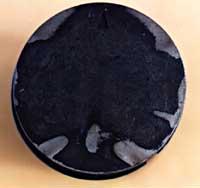 |
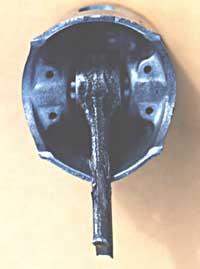
| No problems here. This is what the piston looks like when all is well. |
 |
| Think about this. Your piston travels at speeds of about 125 mph and then comes to a complete stop! This would kill the average man at half that speed. Couple this with the fact that your engine does this up to 10,000 times in a single minute. That’s some serious inertia! Throw some extra friction, poor maintenance, or hack engine mods into the mix, and you’ll get something that looks like this. |
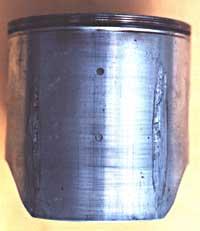 |
| This is called a four-point seizure. The engine was not warmed up before the ride. The engine may lock up for “no reason” and then start after cooling down for a few minutes. Give your engine a few minutes to warm up, and you won’t have this problem. |